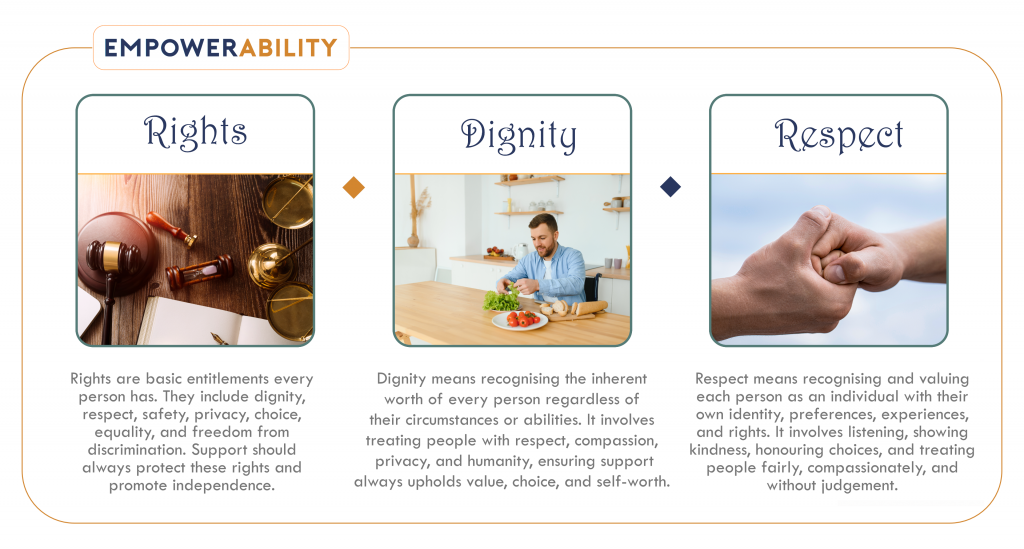
Every person has inherent worth
At EmpowerAbility, we believe rights, dignity, and respect are the foundation of excellent support.
Every person has legal rights, their own identity, life experiences, preferences, hopes, and inherent worth.
Always see the person before the diagnosis, disability, or support need. Instead of focusing on limitations, recognise the whole person and everything that makes them unique.
No matter a person’s age, disability, illness, communication needs, or life circumstances, treat them with kindness, fairness, compassion, and respect.
This standard guides everything we do.
What this standard means
Definition
This standard explains how to protect people’s rights, preserve their dignity, and show respect in every part of daily support.
Apply these principles to every conversation, decision, environment, policy, and system.
Why it matters
Dignity is a basic part of living a healthy and fulfilling life.
When you protect dignity, people are more likely to feel:
- safe
- respected
- valued
- confident
- empowered
- emotionally secure
However, when people lose their dignity, they may feel:
- humiliated
- ashamed
- frightened
- powerless
- distressed
- unable to trust others
Everyday actions matter. For example, the way you speak, listen, support, and include people can either protect their dignity or reduce it.
How it improves people’s lives
Protecting rights, dignity, and respect helps people:
- live more independently
- enjoy greater privacy
- express their identity
- feel safer
- experience equality
- exercise their human rights
- live free from degrading treatment
As a result, people gain confidence, choice, and a better quality of life.
Core principle
Treat every person in a way that protects their rights, respects who they are, and recognises their value.
Because of this, every member of EmpowerAbility should apply these principles every day.
Understanding rights, dignity and respect
Protect people’s rights

Rights are more than legal rules. They should shape everyday practice.
Everyone has the right to:
- privacy
- safety
- personal choice
- freedom of expression
- family life
- personal relationships
- equality
- religious or cultural identity
- fair treatment
- freedom from abuse, neglect, and discrimination
Bring these rights to life through your actions—not simply through written policies.
Protect dignity
Treat every person as someone with value.
Never treat people as:
- burdens
- problems
- tasks
- diagnoses
- risks to manage
- objects of pity
Instead:
- speak respectfully
- protect privacy
- seek consent
- preserve modesty
- encourage independence
- respect personal choices
- honour individual preferences
Often, the smallest actions make the biggest difference.
Show respect
Respect starts with listening.
Take time to understand each person’s:
- preferences
- boundaries
- beliefs
- culture
- communication style
- values
- life experiences
Keep an open mind and avoid assuming you always know what is best.
Instead, listen carefully and value the person’s views.
Required outcomes
Protect people’s rights
Recognise and uphold every person’s legal and human rights.
Only limit freedom or choice when the law allows it, the restriction is necessary, and you review it regularly.
Protect privacy
Give people privacy in their:
- bedroom
- bathroom
- personal belongings
- conversations
- communications
- personal records
Protecting privacy protects dignity.
Respect identity
Respect each person’s:
- culture
- religion
- beliefs
- gender identity
- sexuality
- communication style
- personal preferences
Help people express who they are without fear of judgement.
Seek meaningful consent
Involve people in decisions that affect their lives.
Explain information clearly, check understanding, and ask for genuine consent whenever possible.
Avoid taking control simply because it seems easier.
Communicate with respect
Choose your words carefully.
Avoid:
- patronising language
- treating adults like children
- dismissive comments
- shouting
- humiliation
- public criticism
Respectful communication helps people feel safe and valued.
Promote independence
Help people do as much as they safely can for themselves.
Although support is important, doing everything for someone can reduce confidence and independence.
Instead, encourage people to develop their skills and make their own choices.
Best practice guidance
Use respectful language
Ask people how they would like you to address them.
Then use their preferred name, pronouns, and communication style consistently.
Protect privacy during personal care
Protect:
- privacy
- dignity
- modesty
- choice
- consent
Even routine personal care should feel respectful, calm, and unhurried.
Knock and ask permission
Show respect through simple everyday actions.
For example:
- knock before entering a bedroom
- knock before entering someone’s home
- ask before moving personal belongings
- ask permission before offering support
- explain what you are doing before helping
These small actions show people they matter.
Speak with people, not about them
Keep the person at the centre of every conversation.
Even when family members or professionals are present, speak directly to the individual whenever possible.
Respect the dignity of risk
Support people to make their own choices, even when those choices involve reasonable risk.
Reduce unnecessary danger where you can, but avoid removing opportunities simply because they involve uncertainty.
Poor practice
Warning signs
Review your practice if you notice:
- talking about people as tasks
- failing to protect privacy
- placing unnecessary restrictions on people
- using disrespectful language
- controlling people unnecessarily
- treating adults like children
- ignoring personal preferences
- discussing private information in public
- failing to seek consent
Common mistakes
Do not assume kindness alone protects dignity.
Likewise, avoid speaking mainly to family members, rushing personal care, or making decisions without involving the person.
Instead, think carefully about how every action affects the person’s experience.
Evidence of compliance
What inspectors would expect
Inspectors should see staff protecting rights, respecting dignity, seeking consent, and promoting independence throughout everyday practice.
They should also see staff applying these principles consistently, not only describing them.
How you can demonstrate quality
You can demonstrate quality through:
- support observations
- quality audits
- complaints reviews
- incident reviews
- safeguarding records
- resident feedback
- family feedback
- supervision records
- staff training
- support plans
- privacy and consent records
Most importantly, people should experience dignity and respect every day.
Reflection
Questions for support workers
Ask yourself:
- Did I protect this person’s dignity?
- Did I seek meaningful consent?
- Did I listen carefully?
- Did I protect their privacy?
- Did I encourage independence?
- Would this person feel respected after this interaction?
Questions for managers
Ask yourself:
- Do our systems protect people’s rights?
- Do staff understand dignity and respect?
- Do our audits measure real experiences rather than paperwork?
- Do people influence the decisions that affect them?
- Do we review restrictions regularly?
- Do we respond quickly when concerns arise?
Regular reflection leads to better support.
Quick summary
Rights, dignity, and respect should shape every interaction.
Protect people’s rights, respect who they are, and help them live with confidence, choice, and independence.
Key points
- Treat every person with dignity and respect.
- Protect rights through everyday actions.
- Value each person’s identity.
- Protect privacy and seek consent.
- Communicate with kindness.
- Promote independence whenever possible.
Learn more
Related standards
- Standard 2 — Choice, Voice & Control
- Standard 3 — Equality, Diversity & Inclusion
- Standard 6 — Person-Centred Support & Outcomes
- Standard 7 — Communication & Relationships
Video learning
Coming soon:
- What dignity really means
- Respect in everyday support
- Protecting privacy
- Meaningful consent
- The dignity of risk
EmpowerAbility
Empowering lives. Enabling potential.