Understanding Different Ways of Experiencing the World

At EmpowerAbility, we believe that understanding autism starts with one important idea:
Autistic people do not need to be “fixed.”
Autism is not a disease. Nor is it something that is automatically negative.
Instead, autism is a different way of experiencing, processing, and responding to the world.
As a result, autistic people may think, communicate, feel, learn, and interact differently from non-autistic people. These differences can create challenges. However, they can also bring strengths.
Often, the environment plays a major role. A person may struggle in one setting but thrive in another.
Therefore, good support begins with understanding the individual.
Every autistic person is unique.
What Is Autism?
Autism is a lifelong neurodevelopmental condition. It can affect how a person experiences, understands, and interacts with the world.
Autism may influence areas such as:
- communication
- social interaction
- sensory processing
- emotional regulation
- routines and predictability
- attention and focus
- interests and behaviours
Autism is often described as a spectrum.
However, this does not simply mean that people are “more” or “less” autistic. Instead, it means that autism presents differently in each person.
For example, two autistic people may have very different strengths, experiences, and support needs.
Therefore, support should always focus on the individual, not simply the diagnosis.
Autism Is Highly Individual
Some autistic people live highly independent lives and need little or no formal support.
Others may need more support with areas such as:
- communication
- daily living
- emotional regulation
- safety
- relationships
- community participation
In addition, some autistic people may have other conditions or support needs. These may include:
- learning disabilities
- ADHD
- anxiety
- epilepsy
- sensory processing differences
- physical disabilities
- mental health needs
Because every person is different, assumptions based only on a diagnosis can be misleading.
Instead, good support asks:
What does this person need to live well?
Common Experiences
Autism affects everyone differently. However, some experiences are more common among autistic people.
Differences in Social Communication
Some autistic people communicate in a direct or literal way.
As a result, they may find it difficult to understand:
- implied meaning
- sarcasm
- body language
- tone of voice
- facial expressions
- unwritten social expectations
However, this does not mean that the person lacks intelligence, feelings, or empathy.
Instead, they may simply communicate and understand social information differently.
Some autistic people communicate through speech. Others may use:
- AAC devices
- typing
- visual supports
- gestures
- body language
- behaviour
Therefore, communication should always be understood in the person’s preferred way.
Communication is more than speech.
Sensory Processing Differences
Many autistic people experience sensory information differently.
For example, they may be more or less sensitive to:
- noise
- lighting
- touch
- smell
- texture
- temperature
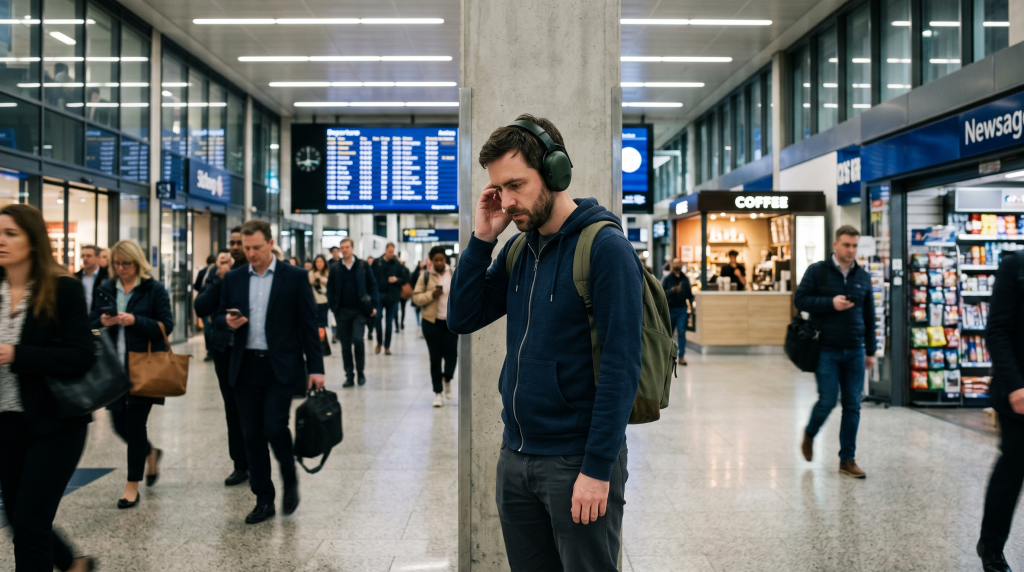
- crowds
An ordinary environment may feel very different to an autistic person.
For example:
- fluorescent lighting may feel painful
- background noise may become overwhelming
- certain fabrics may cause distress
- crowded spaces may lead to exhaustion
As a result, sensory overload can have a major effect on comfort and wellbeing.
Therefore, when a person becomes distressed, it is important to consider the environment.
Sometimes, a small environmental change can make a significant difference.
Need for Predictability
Many autistic people find comfort in routine, structure, and predictability.
Unexpected changes may lead to:
- anxiety
- distress
- confusion
- shutdown
- meltdown
However, a need for routine should not simply be dismissed as rigidity.
For many people, predictability reduces stress and makes daily life easier to manage.
Therefore, when change is necessary, good support should help the person prepare for it.
Clear information and advance notice can reduce uncertainty.
Emotional Regulation
Autistic people may experience strong emotions. However, they may process or express those emotions differently.
Sometimes, stress builds gradually.
Eventually, the person may become overwhelmed. This can lead to:
- shutdown
- withdrawal
- distress
- overwhelm
- meltdown
A meltdown is not a tantrum or deliberate misbehaviour.
Instead, it is often a response to overwhelming stress, sensory input, communication difficulties, or other unmet needs.
Therefore, the most useful question is not:
“How do we stop this behaviour?”
Instead, ask:
“What is causing this person to become overwhelmed?”
Understanding the cause can lead to better support.
Masking
Some autistic people consciously or unconsciously hide their autistic traits to fit in with others. This is often called masking.
For example, masking may involve:
- copying social behaviour
- forcing eye contact
- suppressing stimming
- hiding distress
- rehearsing conversations
A person may appear to be coping well. However, maintaining this appearance can take a great deal of energy.
Over time, masking may contribute to:
- exhaustion
- burnout
- anxiety
- depression
- difficulties with identity
Therefore, we should not assume that someone is coping simply because they appear calm.
What we see on the outside may not reflect what the person is experiencing inside.
Strengths Matter Too
Autism is often discussed only in terms of difficulties.
However, this gives an incomplete picture.
Autistic people may have many strengths, including:
- honesty
- attention to detail
- deep focus
- loyalty
- pattern recognition
- creativity
- logical thinking
- strong memory
- authenticity
Of course, not every autistic person will have these strengths. Just as importantly, no one should have to demonstrate a special talent to be valued.
Nevertheless, good support should recognise what a person can do, what they enjoy, and what matters to them.
At EmpowerAbility, we believe support should build on strengths as well as respond to needs.
Housing and Autism
A person’s home can have a major effect on their wellbeing.

For some autistic people, a poorly designed environment may create ongoing stress. In contrast, a thoughtful environment can improve comfort, independence, and quality of life.
Therefore, housing should work with the person rather than against them.
Create Sensory-Friendly Environments
Where possible, unnecessary sensory stress should be reduced.
This may include considering:
- soft or adjustable lighting
- reduced background noise
- acoustic control
- calm colours
- reduced visual clutter
- comfortable materials
Small changes can sometimes make a major difference.
However, sensory needs are highly individual. Therefore, the person should always be involved in decisions about their environment.
Make the Layout Clear and Predictable
Clear and consistent layouts can reduce cognitive load.
For example, people may benefit from homes where:
- rooms have clear purposes
- storage is easy to understand
- important items are easy to find
- routines are easy to maintain
A predictable environment can create a greater sense of comfort and control.
Provide a Personal Safe Space
Many autistic people benefit from having a private, low-stimulation space.
This may be somewhere to:
- relax
- recover from sensory overload
- enjoy a special interest
- spend time alone
- regulate emotions
Most importantly, the space should feel safe, personal, and controllable.
Privacy matters.
Give People Control Over Their Environment
Where possible, people should have control over their own surroundings.
This may include control over:
- lighting
- temperature
- sound
- routines
- sensory tools
- personal space
Greater control can reduce stress and support emotional regulation.
Therefore, good housing is not only about accessibility.
It is also about choice, comfort, and control.
Supporting Autistic People Well
Good autism support is not about making autistic people behave more like non-autistic people.
Instead, it is about understanding the individual and removing unnecessary barriers.
At EmpowerAbility, we ask:
What is making life harder for this person, and what can we change?
This question often leads to better outcomes than focusing only on behaviour.
Use Clear Communication

Communication should be clear, direct, and respectful.
Helpful approaches may include:
- concrete language
- simple instructions
- clear expectations
- visual supports
- written information
Where possible, avoid unnecessary jargon and ambiguity.
However, simple communication should never become childish or patronising.
Clear language and respectful language can exist together.
Allow Processing Time
Some autistic people need more time to process information and respond.
Therefore, do not rush to fill every silence.
Ask the question clearly. Then allow time for the person to think and respond.
Silence is not failure.
Sometimes, waiting is one of the most helpful things a supporter can do.
Respect Routines
Routines can provide stability and emotional safety.
Therefore, when change is necessary:
- prepare the person in advance
- explain what will happen
- provide clear information
- reduce uncertainty where possible
- offer appropriate reassurance
Unexpected change can be stressful.
However, thoughtful preparation can make change easier to manage.
Understand Behaviour as Communication
Behaviour often has meaning.
When a person becomes distressed, ask:
- Is the environment overwhelming?
- Is communication unclear?
- Is the person in pain or discomfort?
- Is anxiety building?
- Has something unexpected changed?
- Is sensory overload present?
- Is there an unmet need?
Instead of focusing only on what the person is doing, try to understand why it is happening.
Often, changing the environment or support approach can change the outcome.
Avoid Forcing Neurotypical Norms
Not every social convention is necessary for wellbeing.
For example, some autistic people find eye contact uncomfortable or distracting.
Therefore, a lack of eye contact does not automatically mean that someone is:
- not listening
- disengaged
- rude
- disrespectful
Likewise, some autistic people may communicate, move, or regulate themselves in ways that look different from social expectations.
Good support respects these differences unless there is a genuine risk of harm.
The goal should not be to make someone appear more “normal.”
The goal should be to help them live well.
Risks and Vulnerabilities
Some autistic people may be more vulnerable to:
- bullying
- exploitation
- social isolation
- mental health difficulties
- burnout
- sensory overload
- social exclusion
Therefore, good support should recognise and reduce genuine risks.
However, risk management should not become overprotection.
Too much control can reduce:
- independence
- confidence
- choice
- opportunity
- quality of life
The aim is not to remove every possible risk.
The goal is safe empowerment.
What Does Best Practice Look Like?
Excellent autism support is:
- person-centred
- sensory-aware
- neurodiversity-affirming
- predictable
- respectful
- strengths-based
- flexible
Above all, the best support adapts to the individual.
It does not demand that the person constantly adapt to an unsuitable environment.
A Key Question
At EmpowerAbility, one question can transform the way we think about autism support:
Is the difficulty within the person, or within the environment around them?
Sometimes, the person needs support.
However, sometimes the environment needs to change.
The lighting may be too harsh.
The room may be too noisy.
Communication may be unclear.
Expectations may be unrealistic.
A routine may have changed without warning.
The person may simply need more time.
Therefore, before asking an autistic person to change, we should first ask whether we can remove the barrier.
Often, changing the environment changes the outcome.
That is one of the most important lessons in good autism support.
Related Standards
This topic connects strongly with:
- Standard 1 — Rights, Dignity & Respect
- Standard 2 — Choice, Voice & Control
- Standard 5 — Housing Quality, Design & Accessibility
- Standard 6 — Person-Centred Support & Outcomes
- Standard 7 — Communication & Relationships
- Standard 8 — Growth, Independence & Realising Potential
Video Learning
This page will eventually include short EmpowerAbility videos covering:
- What is autism?
- Understanding sensory overload
- Autism-friendly communication
- Supporting routines and transitions
- Designing autism-friendly environments
EmpowerAbility
Empowering lives. Enabling potential.