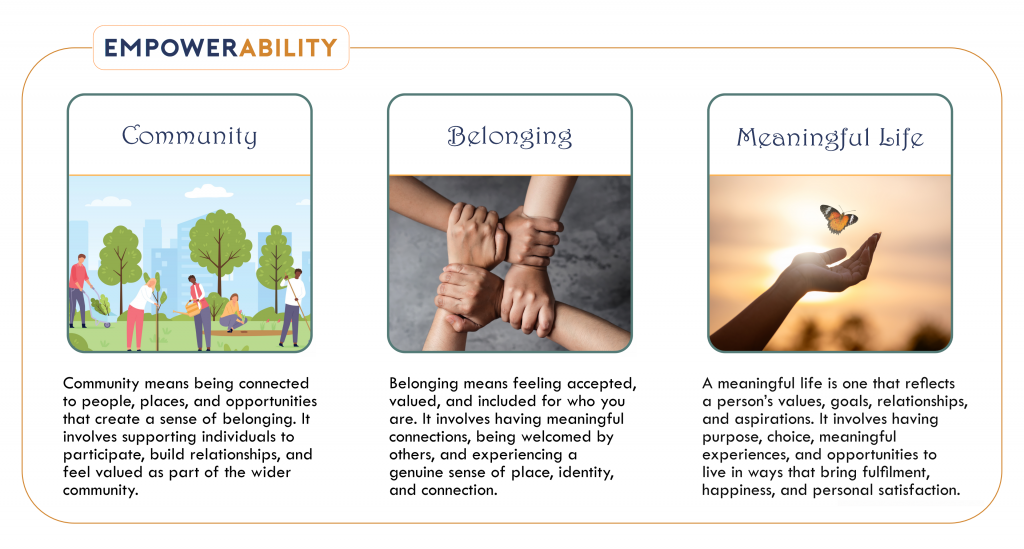
Supporting lives that are connected, valued, and purposeful
At EmpowerAbility, we believe great support is about much more than keeping people safe.
Safety matters.
However, people also need friendship, purpose, opportunities, and a sense of belonging.
Everyone wants to feel accepted, valued, and connected to something bigger than themselves.
Because of this, support should help people build lives that are full of relationships, interests, opportunities, and hope.
Above all, good support should help people live a life that feels meaningful to them.
What this standard means
Definition
This standard explains how to help people build strong relationships, take part in their community, find purpose, and enjoy a fulfilling life.
Why it matters
A person can have a safe home, good health, and excellent care but still feel lonely.
Without connection and purpose, people may experience:
- loneliness
- isolation
- low mood
- loss of confidence
- reduced motivation
- emotional distress
As a result, people may feel disconnected from the world around them.
However, when people feel included and connected, they are more likely to experience:
- happiness
- confidence
- resilience
- stronger relationships
- better wellbeing
- greater satisfaction with life
People need more than support.
They need connection.
Core principle
At EmpowerAbility, we believe good support should help people build a life they enjoy—not simply keep them safe.
Therefore, every person should have opportunities to belong, contribute, and pursue the things that matter most to them.
Understanding community, belonging and meaningful living
Build community connections

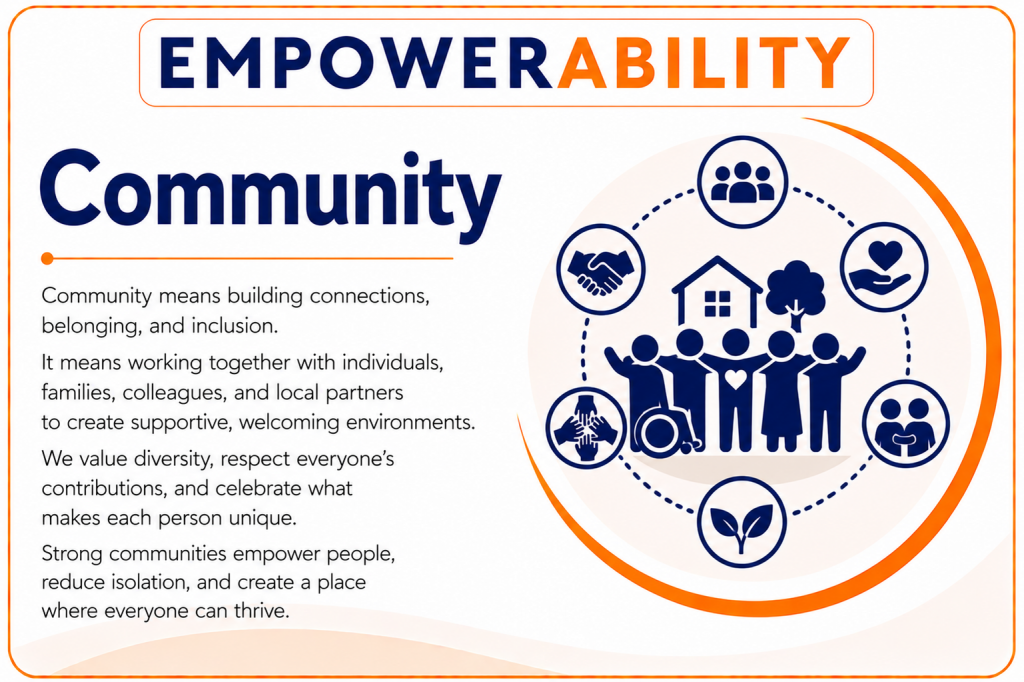
Community means feeling connected to people, places, and activities outside the home.
For example, this might include:
- local groups
- friendships
- clubs
- faith communities
- education
- volunteering
- work
- hobbies
- social activities
Community helps people feel connected instead of isolated.
Help people belong
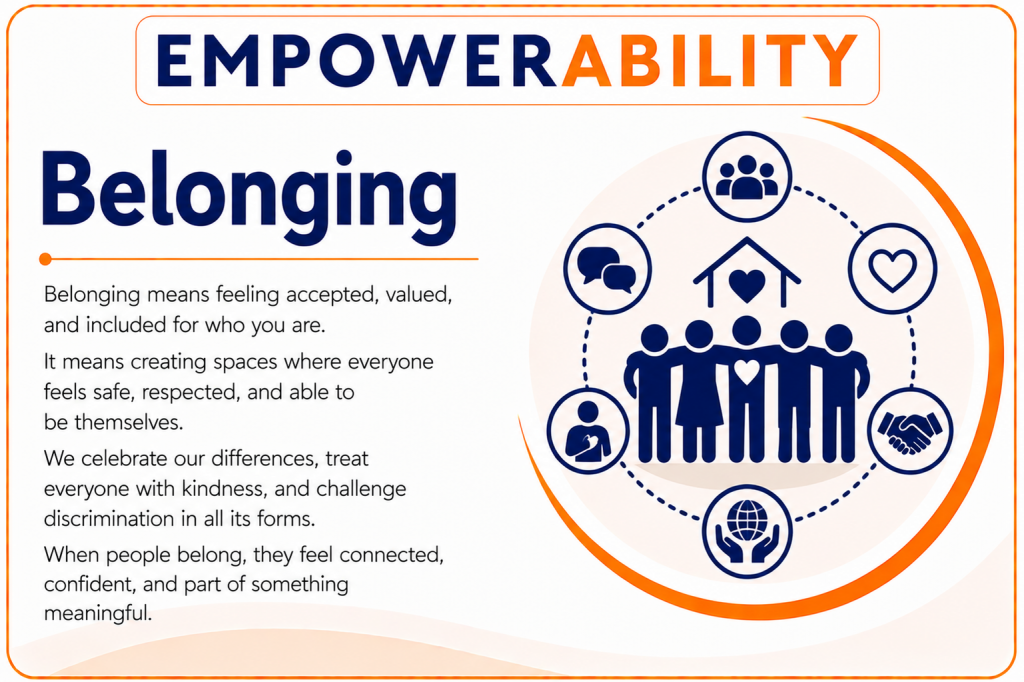
Belonging means more than simply being present.
Instead, it means feeling accepted, respected, included, and able to be yourself.
People are more likely to thrive when they know they belong.
Help people build a meaningful life
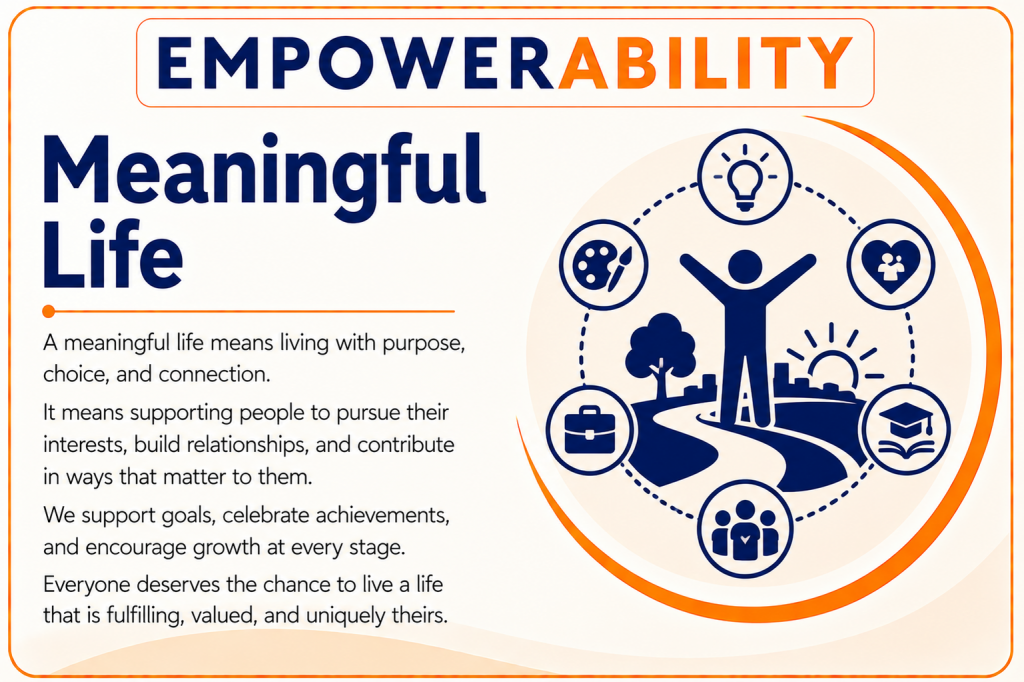
A meaningful life looks different for everyone.
Meaning may come from:
- family
- friendships
- helping others
- work
- learning
- hobbies
- faith
- creativity
- caring for a pet
- everyday routines
Above all, let people decide what gives their life meaning.
Required outcomes
Reduce loneliness
Look for signs of loneliness or isolation and take action early.
Help people build connections rather than accepting isolation as part of life.
Support relationships
Help people maintain and develop healthy relationships with:
- family
- friends
- partners
- neighbours
- community groups
- other people who matter to them
Strong relationships improve wellbeing.
Encourage community participation
Support people to take part in community life.
For example:
- clubs
- education
- volunteering
- places of worship
- leisure activities
- social events
- employment
Taking part helps people build confidence, friendships, and belonging.
Discover what matters
Take time to understand what gives each person enjoyment, motivation, and purpose.
This may include:
- hobbies
- interests
- ambitions
- daily routines
- causes they care about
- personal goals
Support should reflect what matters to the person—not what suits the service.
Value contribution
Everyone has something to offer.
Help people contribute by:
- helping others
- sharing skills
- volunteering
- mentoring
- creating art or music
- taking part in community projects
Giving back helps people build confidence, purpose, and identity.
Respect personal choice
Not everyone enjoys the same activities or social situations.
Therefore, offer opportunities without making assumptions.
Help people build the life they want.
Best practice guidance
Ask about life beyond support
Do not ask only:
“What support does this person need?”
Also ask:
- What makes them happy?
- What gives their life meaning?
- Where do they feel they belong?
- What would they like to do more often?
- What dreams or goals do they have?
These conversations help you understand the whole person.
Value small moments
Meaning often comes from simple everyday experiences.
For example:
- meeting a friend for coffee
- walking a dog
- gardening
- visiting family
- joining a local group
- helping a neighbour
Small moments often have the biggest impact.
Look beyond the service
Support should never become someone’s whole world.
Instead, help people build connections beyond appointments, medication, and daily routines.
Life happens in the community.
Build natural relationships
Professional support is important.
However, friends, family, neighbours, and community connections also play a vital role.
Where possible, strengthen these natural relationships.
Help people contribute
Ask yourself:
- What strengths does this person have?
- How could they help others?
- What opportunities could they enjoy?
People often grow when they realise they have something valuable to offer.
Poor practice
Warning signs
Review your practice if you notice:
- loneliness
- social isolation
- few friendships
- little community involvement
- support focused only on routines
- low motivation
- lack of meaningful goals
- emotional withdrawal
These warning signs should always lead to action.
Evidence of compliance
How you can demonstrate quality
You can demonstrate quality through:
- support reviews
- outcome tracking
- community participation records
- resident feedback
- wellbeing measures
- observations
- family feedback
- quality audits
Most importantly, people should experience richer relationships, stronger community connections, and a greater sense of purpose.
Reflection
Questions to ask
- Does this person feel they belong?
- Are they building meaningful relationships?
- Is loneliness increasing or reducing?
- What gives their life purpose?
- Have we created opportunities to contribute?
- Are we helping this person build a life beyond support?
Regular reflection helps people live fuller and more meaningful lives.
Quick summary
Great support is about much more than keeping people safe.
Instead, it helps people build friendships, enjoy their community, find purpose, and live a life that feels meaningful to them.
Key points
- Everyone needs connection.
- Everyone deserves to belong.
- Strong relationships improve wellbeing.
- Community creates opportunity.
- Purpose gives life meaning.
- Great support helps people build fulfilling lives.
Learn more
Related standards
- Standard 2 — Choice, Voice & Control
- Standard 3 — Equality, Diversity & Inclusion
- Standard 6 — Person-Centred Support & Outcomes
- Standard 7 — Communication & Relationships
- Standard 8 — Growth, Independence & Realising Potential
Video learning
Coming soon:
- Why belonging matters
- Reducing loneliness in supported housing
- Building community connections
- Creating meaningful routines
- Helping people live purposeful lives
EmpowerAbility
Empowering lives. Enabling potential.