Seeing the person, not the label

At EmpowerAbility, we believe understanding learning disabilities begins with recognising one simple truth:
A person with a learning disability is first and foremost a person.
A diagnosis may help explain certain challenges, but it does not define someone’s personality, abilities, potential, relationships, preferences, or future.
Every individual is unique.
Some people with learning disabilities require minimal support and live highly independent lives. Others may need significant support with communication, daily living, decision-making, or safety.
Understanding these differences is essential to providing meaningful, respectful, and effective support.
What Is a Learning Disability?
A learning disability is a reduced intellectual ability and difficulty with everyday activities that affects someone throughout their life.
This can affect areas such as:
- understanding information
- learning new skills
- communication
- problem-solving
- memory
- decision-making
- daily living tasks
A learning disability is usually present from childhood and has a lasting impact on development.
It is important to understand that a learning disability is not the same as a learning difficulty.
For example:
- Dyslexia is a learning difficulty
- ADHD is a neurodevelopmental condition
- Autism is a neurodevelopmental condition
- A learning disability affects broader cognitive functioning and adaptive skills
Some people may experience more than one of these.
Learning Disability Is a Spectrum
Learning disabilities vary significantly in severity and presentation.
Some people may have:
Mild learning disability
They may:
- communicate well
- manage many daily tasks
- need occasional guidance or support
Others may have:
Moderate learning disability
They may need more regular support with:
- daily routines
- understanding complex information
- decision-making
- communication
Some people may have:
Severe or profound learning disability
They may require extensive support with most aspects of daily life and may also have:
- physical disabilities
- sensory impairments
- complex health needs
- limited verbal communication
Support must always reflect the individual rather than assumptions about diagnosis.
Common Challenges
A person with a learning disability may experience challenges in one or more areas.
Understanding Information
Complex information can be difficult to process.
This may include:
- long instructions
- abstract concepts
- financial matters
- official documents
- medical information
Information may need to be broken down into smaller, clearer steps.
Communication
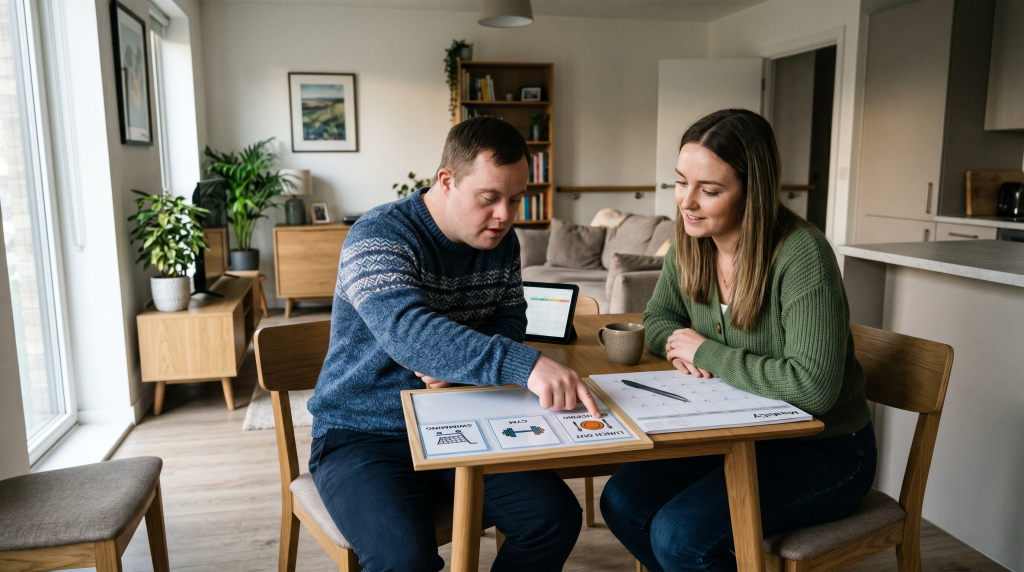
Some people communicate verbally.
Others may use:
- gestures
- visual aids
- symbols
- assistive technology
- body language
- behaviour
Good support requires patience and careful listening.
Communication is not only about speech.
Daily Living Skills
Some people may need support with tasks such as:
- cooking
- cleaning
- shopping
- personal care
- medication
- travel
- money management
The level of support varies greatly.
Social Understanding
Some people may find social situations challenging.
This may include difficulty with:
- reading intentions
- recognising risk
- understanding boundaries
- managing conflict
- recognising exploitation
This can increase vulnerability.
Emotional Wellbeing
Living in a world not designed around your needs can be exhausting.
People with learning disabilities may experience:
- anxiety
- frustration
- low confidence
- trauma
- loneliness
- exclusion
Emotional wellbeing should never be overlooked.
Strengths Matter Too
Too often, support focuses only on needs and risks.
At EmpowerAbility, we believe strengths are equally important.
People with learning disabilities may demonstrate remarkable strengths such as:
- honesty
- loyalty
- kindness
- persistence
- creativity
- humour
- empathy
- strong routines
- practical skills
Good support identifies and builds on strengths.
Housing Implications
Housing has a major impact on independence, safety, and wellbeing.
Poor housing can create confusion, anxiety, and dependence.
Well-designed housing can improve quality of life significantly.
Important considerations may include:
Clear Layout
Simple and intuitive layouts reduce confusion.
People benefit from homes where rooms and functions are easy to understand.
Visual Support
Helpful features may include:
- labels
- symbols
- colour cues
- visual schedules
- prompts
These can support independence.
Safety Features
Supportive environments may include:
- safe cooking systems
- medication storage
- accessible controls
- fire safety measures
- secure access
Safety should be balanced with independence.
Sensory Comfort
Some people may also have sensory sensitivities.
Environmental factors such as:
- lighting
- noise
- clutter
- temperature
can affect comfort and regulation.
Support Considerations
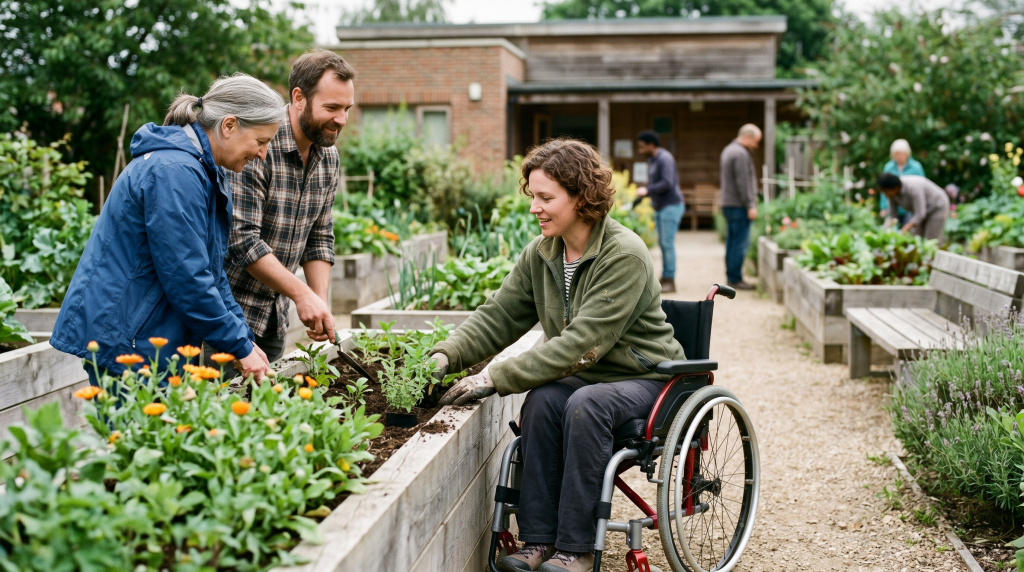
Good support should empower rather than control.
At EmpowerAbility, we encourage support that asks:
What can this person do independently, and what barriers can we remove?
This is very different from asking:
What can’t they do?
Important support principles include:
Use Clear Communication
Use simple, respectful language.
Avoid:
- jargon
- rushing
- overwhelming information
Check understanding.
Give Processing Time
Some people need longer to understand and respond.
Allow time.
Silence is not failure.
Encourage Choice
Real choice matters.
Where possible, offer meaningful choices about:
- routines
- meals
- clothing
- activities
- goals
- living arrangements
Choice supports dignity and autonomy.

Build Skills Gradually
Independence often develops through repetition, encouragement, and confidence-building.
Small progress matters.
Avoid Infantilisation
This is extremely important.
Adults with learning disabilities are adults.
Support should never be patronising, dismissive, or childlike.
Respectful language and attitudes matter enormously.
Risks and Vulnerabilities
Some people with learning disabilities may be more vulnerable to:
- financial abuse
- exploitation
- coercion
- bullying
- mate crime
- neglect
- social isolation
Risk awareness is essential.
However, risk management should not become overprotection.
Overprotection can reduce autonomy and quality of life.
The goal is safe empowerment.
Best Practice
Excellent support for people with learning disabilities is:
- person-centred
- strengths-based
- rights-based
- trauma-informed
- empowering
- respectful
- consistent
The best services do more than keep people safe.
They help people live meaningful lives.
Key Question
At EmpowerAbility, one question guides our approach:
What support does this person need to live the fullest life possible?
That question helps move support beyond maintenance and toward genuine empowerment.
Related Standards
This topic connects strongly with the following EmpowerAbility standards:
- Standard 1 — Rights, Dignity & Respect
- Standard 2 — Choice, Voice & Control
- Standard 5 — Housing Quality, Design & Accessibility
- Standard 6 — Person-Centred Support & Outcomes
- Standard 7 — Communication & Relationships
- Standard 8 — Growth, Independence & Realising Potential
Video Learning
This page will eventually include short EmpowerAbility videos covering:
- What is a learning disability?
- How to communicate effectively
- Promoting independence
- Avoiding over-support
- Supporting choice and autonomy
EmpowerAbility
Empowering lives. Enabling potential.