Creating homes that support dignity, independence, and wellbeing
At EmpowerAbility, we believe a home is much more than a place to live.
The quality, design, and accessibility of a home influence almost every aspect of daily life, including safety, comfort, health, privacy, independence, and emotional wellbeing.
Good housing removes barriers and creates opportunities. It helps people feel safe, valued, confident, and able to live as independently as possible.
A well-designed home does more than meet needs—it helps people thrive.
What this standard means
Definition
This standard promotes housing that is safe, accessible, inclusive, comfortable, and designed around the people who live there.
Good design should make everyday life easier, support independence, and improve quality of life.
Why it matters
Poor housing can contribute to:
- falls and injuries
- stress and anxiety
- reduced independence
- poor physical or mental health
- isolation
- unnecessary dependence
Even small barriers can have a significant impact.
Well-designed housing, by contrast, can improve:
- safety
- mobility
- confidence
- comfort
- privacy
- wellbeing
- independence
The environment people live in shapes the lives they are able to lead.
Core principle
At EmpowerAbility, we believe people should not have to adapt to poorly designed environments.
Wherever reasonably possible, the environment should adapt to the person.
Good design removes barriers and creates opportunities.
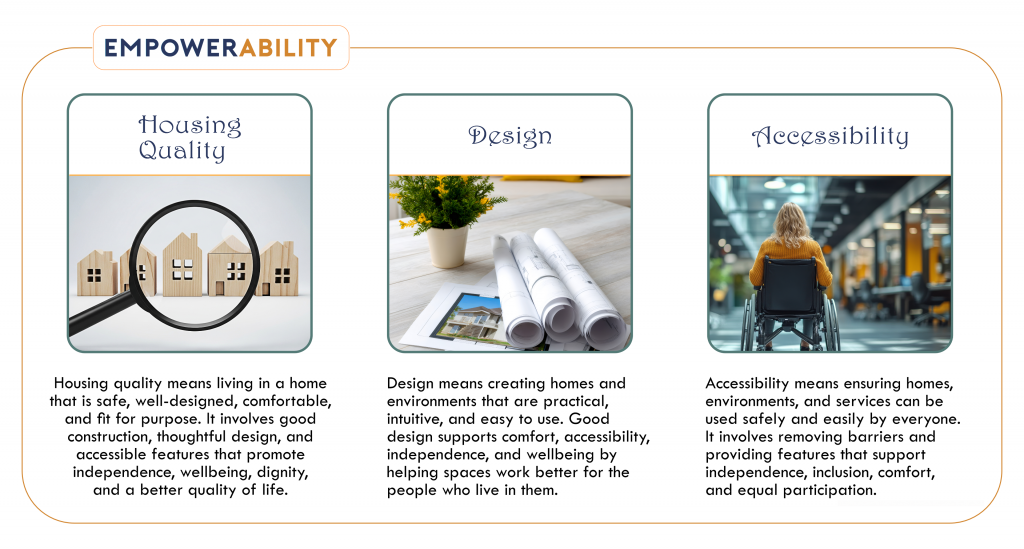
Understanding housing quality, design and accessibility
Housing quality

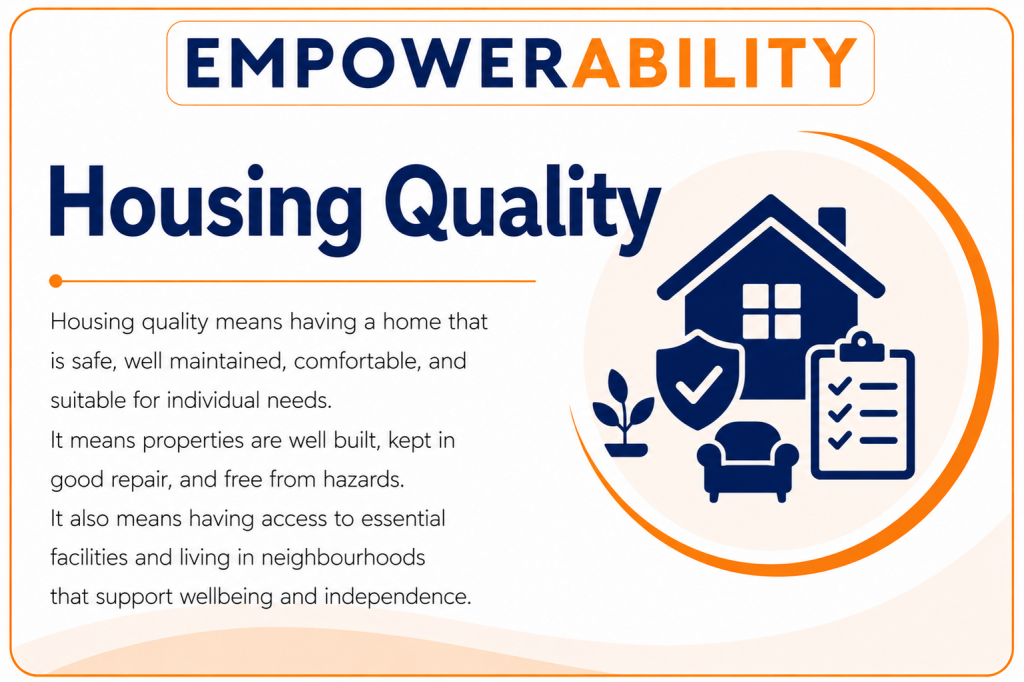
A good home should be:
- safe
- warm
- dry
- comfortable
- well maintained
- energy efficient
- free from avoidable hazards
A home should always feel welcoming, not institutional.
Design
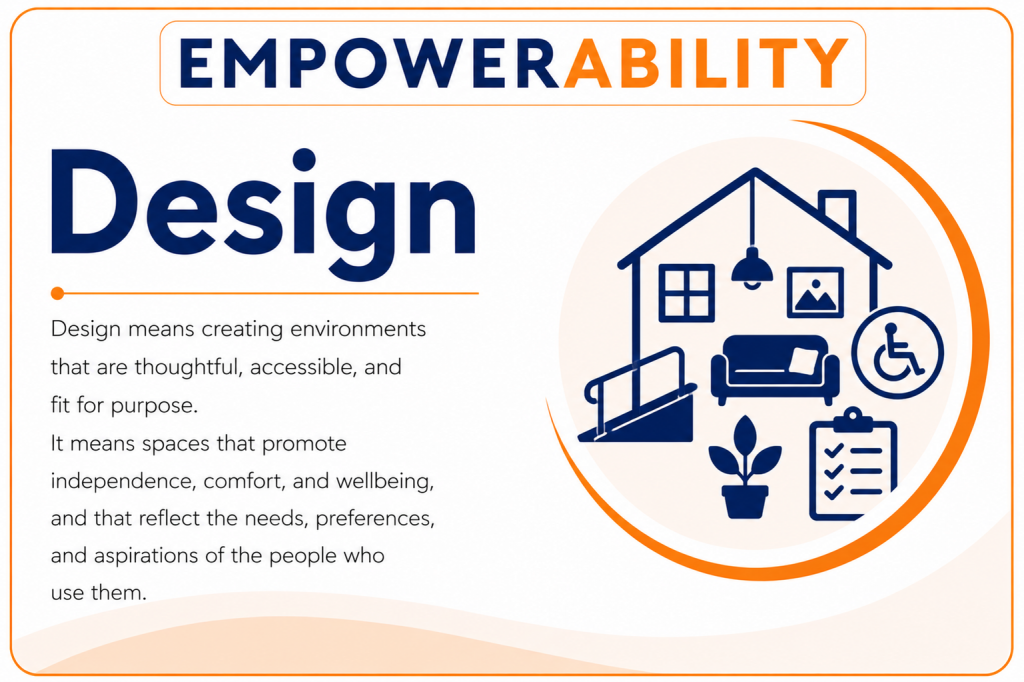
Good design makes everyday life easier.
It considers:
- layout
- movement
- lighting
- privacy
- storage
- comfort
- ease of use
Thoughtful design reduces frustration and supports independence.
Accessibility
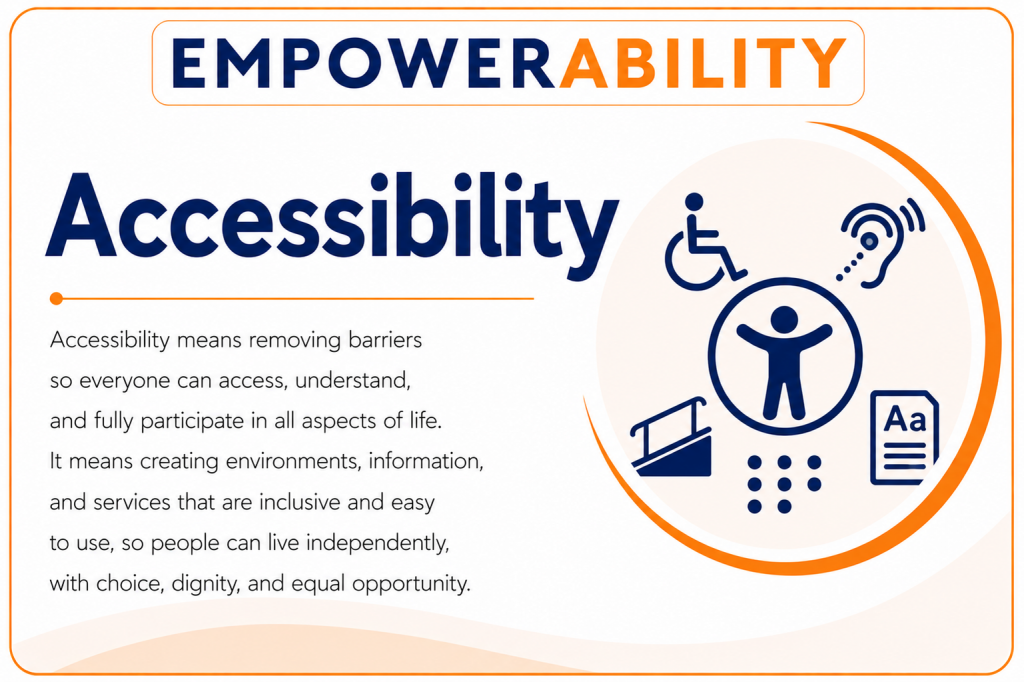
Accessibility means creating environments that people can use safely, comfortably, and independently.
It includes much more than wheelchair access.
Good accessibility considers mobility, vision, hearing, cognition, communication, sensory needs, and long-term adaptability.
Required outcomes
Homes are safe and well maintained
Homes should be structurally sound, clean, warm, secure, and maintained to a high standard.
Repairs should be completed promptly to protect safety, comfort, and dignity.
Accessibility is considered
Homes should remove unnecessary barriers wherever possible.
This may include:
- step-free access
- wider doorways
- level thresholds
- accessible entrances
- grab rails
- adequate turning space
Accessibility should be planned, not added as an afterthought.
Everyday living supports independence
Bathrooms and kitchens should be designed to help people complete everyday tasks safely and independently.
Accessible layouts, practical storage, and easy-to-use fittings can make a significant difference.
Sensory needs are recognised
Homes should consider lighting, noise, colour, and visual clutter to create environments that are calm, comfortable, and easy to use.
This is particularly important for people with autism, dementia, acquired brain injuries, or sensory sensitivities.
Privacy is protected
Everyone should have access to personal space, privacy, and opportunities for quiet time.
Privacy supports dignity, wellbeing, and emotional regulation.
Technology is used thoughtfully
Assistive technology can increase independence and safety.
Examples include:
- voice controls
- smart lighting
- telecare
- fall detection
- medication reminders
- environmental controls
Technology should support people, not replace meaningful human relationships.
Best practice guidance
Design for independence
Ask yourself:
- Does this home help the person do more for themselves?
- Have unnecessary barriers been removed?
- Could small changes improve everyday life?
Good design should maximise independence.
Go beyond minimum standards
Meeting building regulations is only the starting point.
Aim to create homes that are welcoming, practical, inclusive, and enjoyable to live in.
Reduce everyday barriers
Small improvements often make the biggest difference.
Examples include:
- better lighting
- improved storage
- easier-to-reach controls
- clearer layouts
- safer circulation routes
Thoughtful design improves quality of life.
Make homes feel like homes
Supportive housing should never feel clinical or institutional.
People should feel comfortable, respected, and proud of where they live.
Plan for the future
People’s needs may change over time.
Flexible, adaptable homes help people remain independent for longer and reduce the need for disruptive changes later.
Poor practice
Warning signs
Warning signs include:
- repeated falls
- inaccessible layouts
- unresolved repairs
- poor lighting
- unsafe bathrooms
- unsuitable furniture
- excessive noise
- uncomfortable temperatures
- repeated complaints about the environment
These concerns should always be reviewed promptly.
Evidence of compliance
Quality may be demonstrated through:
- housing inspections
- maintenance records
- accessibility audits
- environmental risk assessments
- resident feedback
- adaptation reviews
- incident reports
Quality should be visible in the homes people live in every day.
Reflection
Questions to ask
- Does this home promote independence?
- Have unnecessary barriers been removed?
- Is the home safe, comfortable, and welcoming?
- Does the design protect dignity and privacy?
- Have sensory needs been considered?
- Would I be happy to live here myself?
Quick summary
A good home does far more than provide shelter.
It creates the safety, comfort, accessibility, and independence that allow people to live fulfilling lives.
Key points
- Great housing enables independence.
- Good design removes barriers.
- Accessibility benefits everyone.
- Homes should feel welcoming, not institutional.
- Small improvements can make a big difference.
- The environment should adapt to people wherever possible.
Learn more
Related standards
- Standard 1 — Rights, Dignity & Respect
- Standard 3 — Equality, Diversity & Inclusion
- Standard 4 — Safe, Healthy & Secure Living
- Standard 6 — Person-Centred Support & Outcomes
- Standard 8 — Growth, Independence & Realising Potential
Video learning
Coming soon:
- What makes housing truly accessible
- Designing for dignity and independence
- Dementia-friendly design
- Sensory-friendly environments
- Smart technology in supported housing
EmpowerAbility
Empowering lives. Enabling potential.