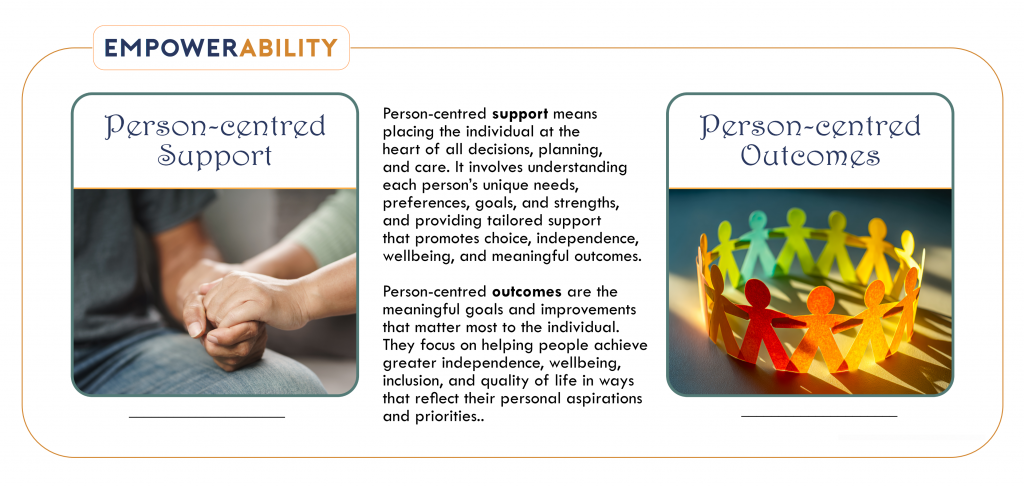
Supporting the individual, not the system
At EmpowerAbility, we believe support should be built around the person—not around routines, paperwork, or organisational convenience.
Every person has their own strengths, experiences, goals, preferences, communication style, and hopes for the future.
Because everyone is different, support should never be the same for everyone.
Instead, great support starts by understanding the person and helping them build the life they want to live.
What this standard means
Definition
This standard explains how to provide support that is built around each person, focuses on their strengths, and helps them achieve the outcomes that matter most to them.
Why it matters
When support is not person-centred, people may experience:
- less choice
- lower confidence
- dependence on others
- frustration
- disengagement
- poorer outcomes
As a result, support can become more about completing tasks than improving lives.
However, when support is truly person-centred, people are more likely to experience:
- confidence
- independence
- greater wellbeing
- meaningful progress
- higher satisfaction
Good support improves lives—not just services.
Core principle
At EmpowerAbility, we believe good support starts with understanding the person, what matters to them, and what they want to achieve.
Therefore, support should adapt to the individual—not expect the individual to adapt to the service.
Understanding person-centred support and outcomes
Person-centred support

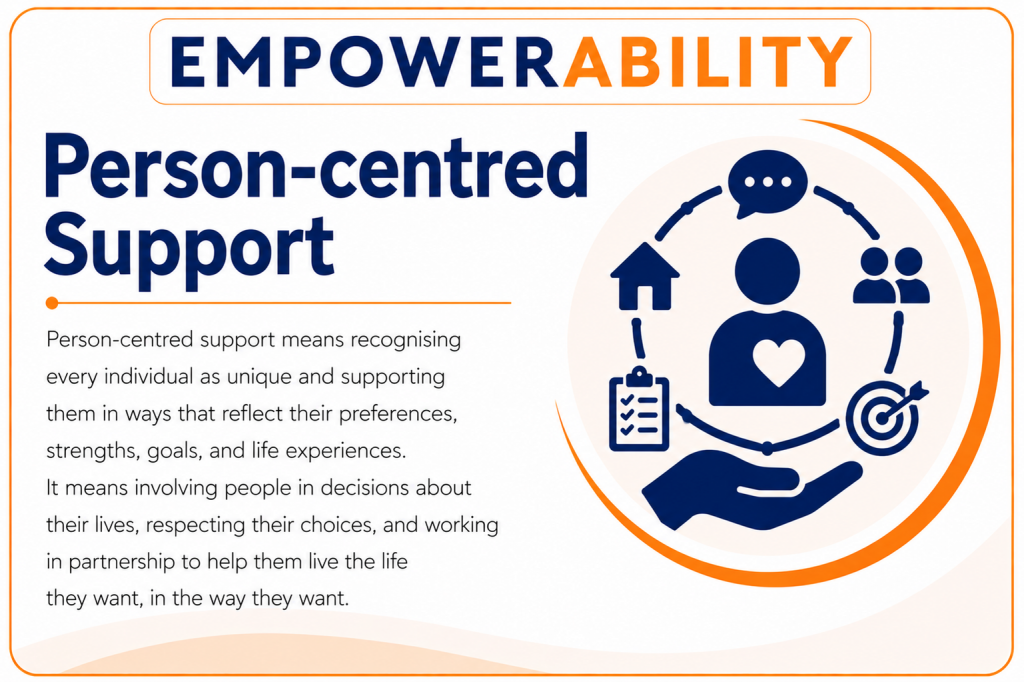
Person-centred support means looking beyond a diagnosis or support need.
Instead, take time to understand:
- what matters to the person
- their strengths
- their preferences
- how they communicate
- the people who are important to them
- their goals
- the barriers they face
Support should reflect the person’s life, not a standard template.
Meaningful outcomes
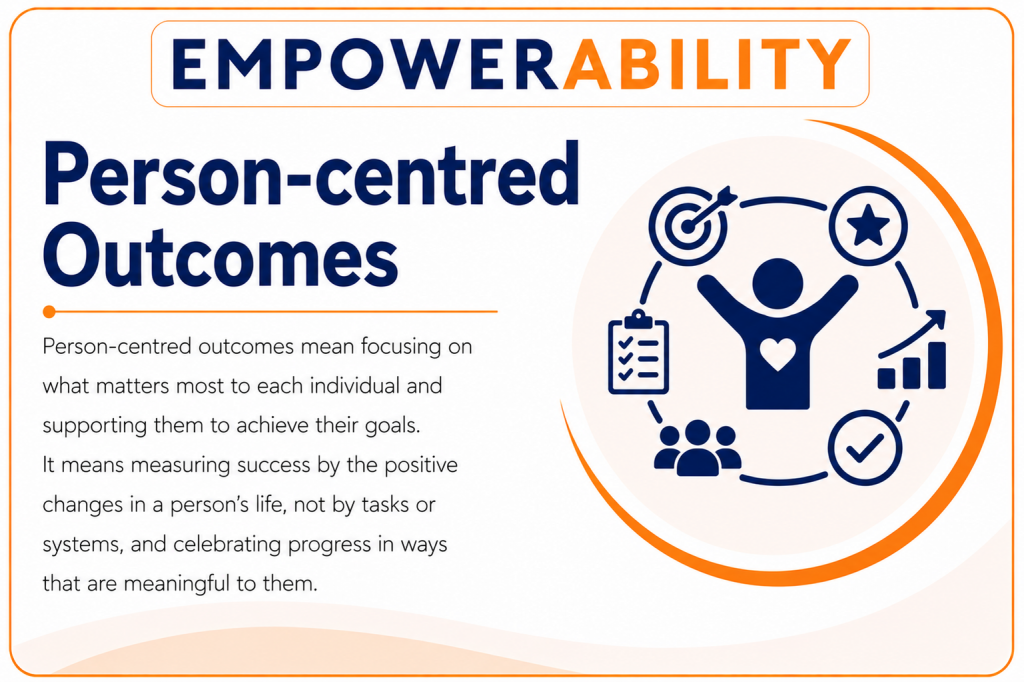
Outcomes are the positive changes people want to see in their lives.
For example, they may want to:
- become more independent
- build confidence
- improve their health
- strengthen relationships
- develop safer routines
- take part in their community
- communicate more confidently
- keep their home successfully
Above all, the most important outcomes are the ones that matter to the person.
Required outcomes
Start by understanding the person
Take time to understand the person’s strengths, needs, goals, communication, home, and support network.
Then use that understanding to plan the right support.
Create personalised support plans
Write practical support plans that are easy to understand and use.
They should explain:
- what matters to the person
- the support they need
- how staff should provide that support
- the outcomes they want to achieve
Keep plans useful rather than creating unnecessary paperwork.
Build on strengths
Look for what people can do.
Then build on their abilities, interests, and skills to help them grow in confidence and independence.
Focus on meaningful outcomes
Choose outcomes that are realistic, measurable, and important to the person.
Remember, the goal is to improve quality of life—not simply complete support tasks.
Promote independence
Help people do as much as they safely can for themselves.
As confidence grows, independence often grows too.
Review support regularly
People’s lives change.
Therefore, review support regularly and make changes whenever needs, goals, or circumstances change.
Best practice guidance
Start with what matters
Ask questions such as:
- What does a good day look like?
- What matters most to you?
- What would you like to achieve?
- What support would help you reach your goals?
These conversations help you understand what really matters.
Focus on strengths
Look for abilities, interests, talents, and opportunities—not just difficulties.
People make the best progress when others recognise and encourage their strengths.
Focus on people, not tasks
Daily tasks are important.
However, they are not the reason support exists.
Instead, the real goal is to help people live happier, healthier, safer, and more independent lives.
Celebrate progress
Progress often happens one step at a time.
Therefore, celebrate every success, no matter how small.
Small achievements build confidence and encourage further progress.
Poor practice
Warning signs
Review your practice if you notice:
- generic support plans
- little involvement from the person
- unclear goals
- little evidence of progress
- growing dependence
- support focused only on tasks
- reviews taking place too rarely
These warning signs should always lead to action.
Evidence of compliance
How you can demonstrate quality
You can demonstrate quality through:
- assessments
- personalised support plans
- outcome reviews
- progress records
- resident feedback
- family feedback
- quality audits
- supervision records
Most importantly, people should experience better lives—not simply better paperwork.
Reflection
Questions to ask
- Do we really understand this person?
- Does support reflect what matters to them?
- Are we building on their strengths?
- Are we achieving meaningful outcomes?
- Is independence growing?
- Is this support improving the person’s quality of life?
Regular reflection helps improve support.
Quick summary
Person-centred support is about helping people build the life they want—not simply delivering a service.
Instead of focusing only on tasks, focus on helping people grow, achieve their goals, and live more independently.
Key points
- Every person is unique.
- Build support around the individual.
- Build on strengths.
- Focus on outcomes that matter.
- Encourage independence.
- Help people live the life they choose.
Learn more
Related standards
- Standard 1 — Rights, Dignity & Respect
- Standard 2 — Choice, Voice & Control
- Standard 5 — Housing Quality, Design & Accessibility
- Standard 7 — Communication & Relationships
- Standard 8 — Growth, Independence & Realising Potential
Video learning
Coming soon:
- What person-centred support really means
- Strengths-based practice
- Writing meaningful support plans
- Measuring outcomes that matter
- Promoting independence without over-support
EmpowerAbility
Empowering lives. Enabling potential.