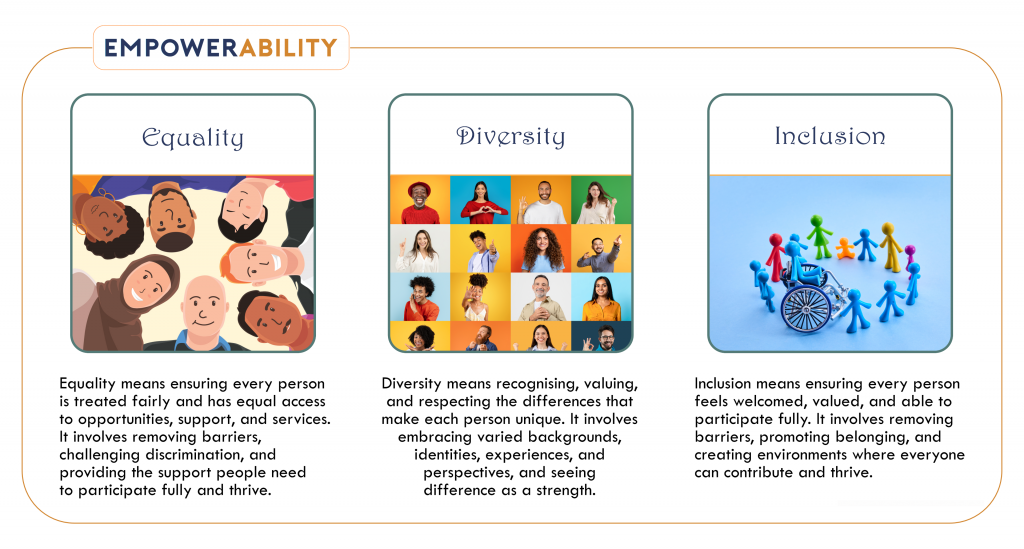
Creating environments where everyone belongs
At EmpowerAbility, we believe everyone has the right to be treated fairly, valued equally, and included fully in society.
People are all different. We have different backgrounds, cultures, beliefs, identities, abilities, communication styles, and life experiences.
These differences should never become barriers to dignity, opportunity, safety, or belonging.
Instead, they should be recognised, respected, and celebrated.
True inclusion means creating homes, services, and communities where people can be themselves and participate fully.
What this standard means
Definition
This standard promotes equality, values diversity, removes barriers to inclusion, and challenges discrimination wherever it occurs.
It encourages support that recognises individual differences and helps everyone participate, contribute, and belong.
Why it matters
When equality and inclusion are missing, people may experience:
- discrimination
- exclusion
- prejudice
- isolation
- unequal opportunities
- reduced confidence
- emotional harm
When people feel welcomed and included, they are more likely to experience:
- belonging
- confidence
- trust
- opportunity
- meaningful relationships
- community connection
Inclusion improves lives.
Core principle
At EmpowerAbility, we believe people should never be disadvantaged because systems, environments, attitudes, or practices fail to recognise human diversity.
The responsibility for inclusion belongs to all of us.
Our aim is not simply to help people access services, but to ensure those services genuinely work for everyone.
Understanding equality, diversity and inclusion
Equality

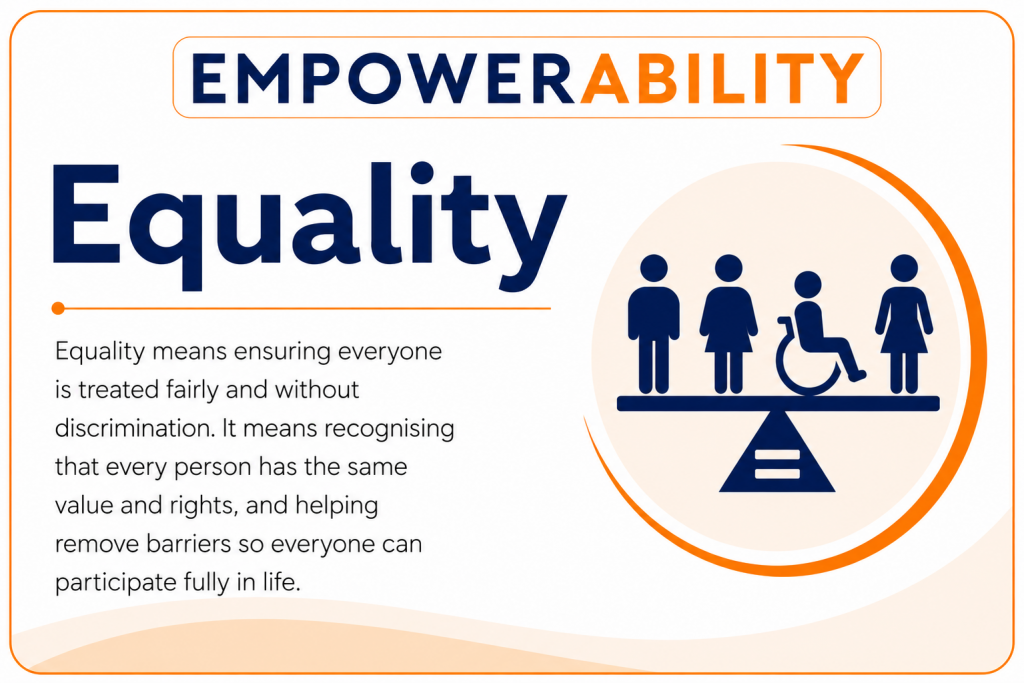
Equality means treating people fairly and providing equitable access to opportunities, housing, support, and participation.
Sometimes fairness means providing different support to achieve equal outcomes.
Diversity
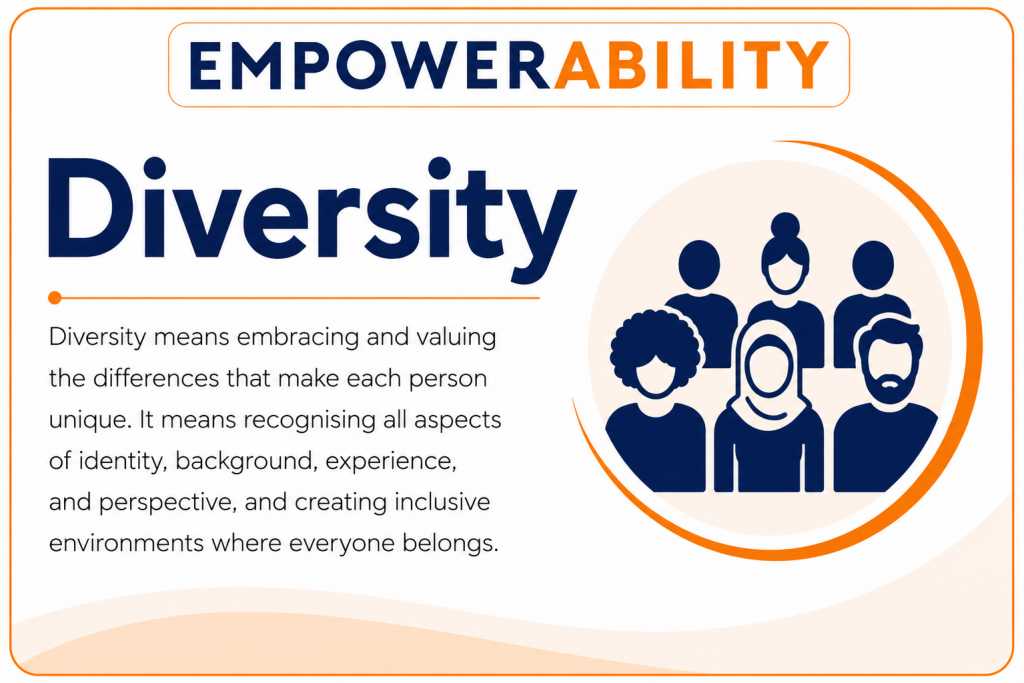
Diversity recognises and values the many differences that make each person unique.
These may include disability, age, culture, language, religion, sexuality, gender identity, ethnicity, neurodiversity, and life experience.
Diversity strengthens communities.
Inclusion
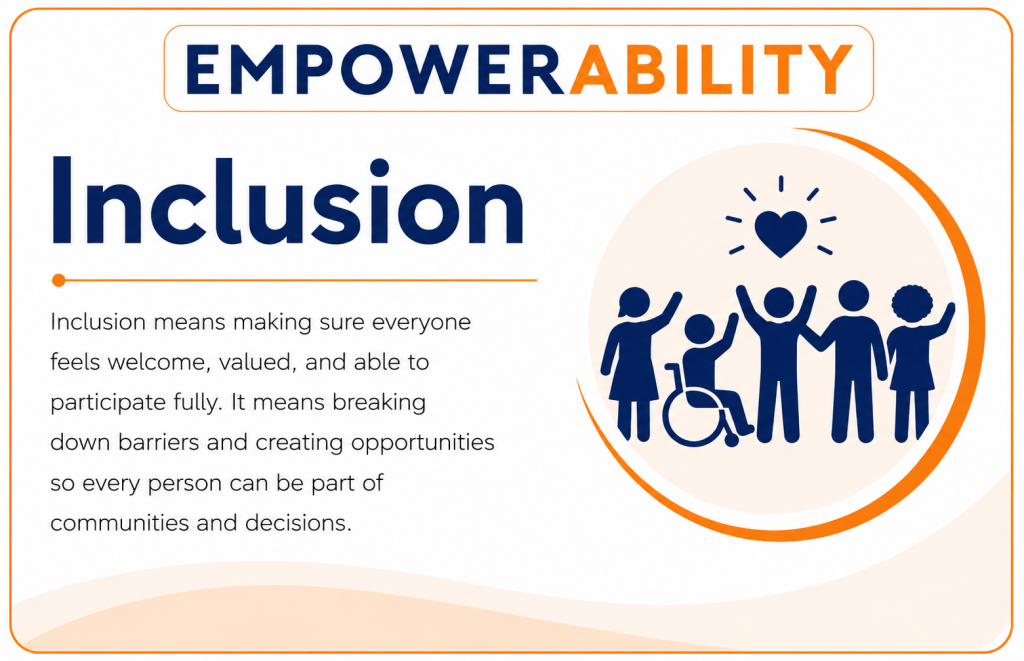
Inclusion is about more than being present.
People should be able to participate, contribute, build relationships, and feel accepted without hiding who they are.
Everyone deserves to belong.
Required outcomes
Discrimination is prevented
Discrimination, harassment, prejudice, and exclusion are never acceptable.
Concerns should always be recognised, challenged, and addressed promptly.
Barriers are removed
Support should identify and reduce physical, communication, cultural, financial, and procedural barriers that limit participation.
Reasonable adjustments are made
People should receive the adjustments they need to access services and participate fully.
These may include accessible information, communication support, sensory adaptations, flexible approaches, or assistive technology.
Identity is respected
Support should respect every person’s culture, beliefs, language, sexuality, gender identity, values, and personal expression.
Nobody should feel pressure to hide who they are.
Inclusion is promoted
People should feel:
- welcomed
- respected
- represented
- heard
- valued
- included
Inclusion should be intentional, not accidental.
Best practice guidance
Challenge assumptions
Many barriers begin with assumptions.
Ask yourself:
- Are our services designed for everyone?
- Have we considered different needs?
- Are hidden barriers preventing participation?
Use inclusive communication
Use communication that is accessible, respectful, and easy to understand.
This may include plain English, Easy Read information, visual supports, interpreters, translation, or alternative formats.
Respect individual differences
Remain curious and respectful about different cultures, beliefs, communication styles, and life experiences.
There is no single “normal” way of living.
Create inclusive environments
Inclusive environments are welcoming, accessible, psychologically safe, and free from discrimination.
People should feel they belong from the moment they arrive.
Poor practice
Warning signs
Warning signs include:
- discriminatory language
- inaccessible environments
- lack of reasonable adjustments
- cultural insensitivity
- unconscious bias
- exclusion from activities
- complaints about unfair treatment
These concerns should always trigger review.
Evidence of compliance
Quality may be demonstrated through:
- accessibility reviews
- equality audits
- resident feedback
- complaints analysis
- staff training
- supervision records
- observations
- action plans
Quality should be reflected in everyday practice and organisational culture.
Reflection
Questions to ask
- Are we treating people fairly?
- Have we removed unnecessary barriers?
- Does this person feel included?
- Have we made the adjustments they need?
- Are we challenging our own assumptions?
- Does everyone genuinely feel they belong?
Quick summary
Equality means fairness.
Diversity recognises our differences.
Inclusion ensures everyone can participate, contribute, and belong.
Key points
- Everyone deserves fair treatment.
- Diversity is a strength.
- Inclusion creates belonging.
- Barriers should be removed.
- Reasonable adjustments promote equal opportunities.
- Great support enables everyone to thrive.
Learn more
Related standards
- Standard 1 — Rights, Dignity & Respect
- Standard 2 — Choice, Voice & Control
- Standard 5 — Housing Quality, Design & Accessibility
- Standard 7 — Communication & Relationships
- Standard 10 — Community, Belonging & Meaningful Life
Video learning
Coming soon:
- Equality and equity explained
- Hidden barriers to inclusion
- Challenging unconscious bias
- Inclusive communication
- Creating environments where everyone belongs
EmpowerAbility
Empowering lives. Enabling potential.