Creating environments where people can live safely and thrive
At EmpowerAbility, we believe safety is one of the foundations of a good life.
When people feel safe, healthy, and secure, they are more likely to build confidence, become more independent, and achieve their goals.
However, safety should never become an excuse for unnecessary control or overprotection. Instead, it should reduce harm while protecting dignity, supporting wellbeing, and encouraging independence.
What this standard means
Definition
This standard explains how to create safe, healthy, and secure homes where people can live well, stay healthy, and enjoy meaningful lives.
Why it matters
Without safety and security, people may experience:
- abuse or neglect
- injury or illness
- exploitation
- emotional harm
- unstable housing
As a result, people may lose confidence, become more dependent, or struggle to achieve their goals.
On the other hand, when people feel safe and supported, they are more likely to experience:
- confidence
- trust
- better health
- emotional wellbeing
- greater independence
Because of this, safety provides the foundation for growth.
Core principle
At EmpowerAbility, we believe safety should reduce harm without taking away freedom, dignity, or opportunity.
The goal is not to remove every risk.
Instead, the goal is safe empowerment.
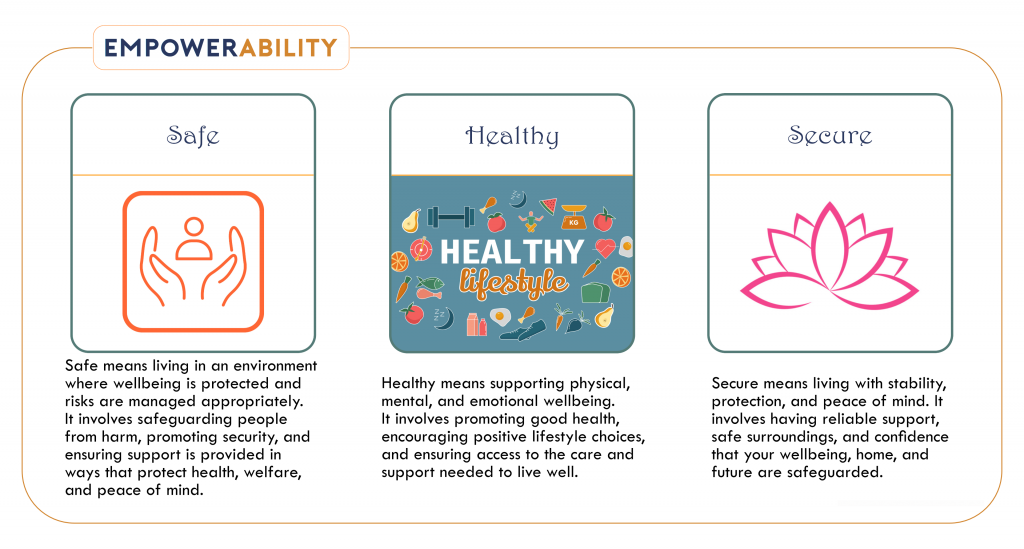
Understanding safety, health and security
Safe

Safety means protecting people from harm through good planning, safe homes, effective safeguarding, and everyday support.
Healthy
Good health means supporting people’s physical, mental, and emotional wellbeing.
This includes healthy lifestyles, safe medicines, early action when health changes, and good access to healthcare.
Secure
Security means helping people feel protected, respected, stable, and confident in their home and support.
When people feel secure, they are more likely to live with confidence.
Required outcomes
Protect people from harm
Protect people from abuse, neglect, exploitation, discrimination, and other forms of harm.
Because safeguarding is everyone’s responsibility, everyone should know how to recognise concerns and respond quickly.
Manage risk sensibly
Identify risks early and manage them in a way that protects people without limiting independence more than necessary.
Always keep the person at the centre of decisions.
Support good health
Help people stay healthy by recognising changes early, encouraging healthy routines, supporting medicines safely, and helping people access healthcare when they need it.
Create safe homes
Keep homes warm, secure, clean, well maintained, and free from unnecessary hazards.
Safe homes support both wellbeing and independence.
Protect emotional wellbeing
People should feel respected, listened to, and emotionally safe.
Therefore, never ignore bullying, intimidation, or emotional distress.
Best practice guidance
Balance safety with independence
Always ask yourself:
- Are we reducing risk in a sensible way?
- Are we protecting people without limiting opportunity?
- Could this person do more with the right support?
Good support protects people while helping them grow.
Recognise early warning signs
Take changes in health, behaviour, mood, mobility, or relationships seriously.
Often, early action prevents bigger problems later.
Create safe environments
Regularly check homes for:
- hazards
- repairs
- fire safety
- accessibility
- cleanliness
- security
Prevention is one of the best ways to keep people safe.
Poor practice
Warning signs
Review your practice if you notice:
- repeated accidents
- safeguarding concerns
- medication errors
- unsafe housing
- unresolved repairs
- unnecessary restrictions
- emotional distress being overlooked
These warning signs should always lead to action.
Evidence of compliance
How you can demonstrate quality
You can demonstrate quality through:
- safeguarding records
- incident reports
- risk assessments
- medication audits
- maintenance records
- resident feedback
- supervision records
- quality audits
Most importantly, people should experience safety, wellbeing, and respect every day.
Reflection
Questions to ask
- Does this person feel safe?
- Are we helping them become more independent?
- Have we managed risk in a fair and balanced way?
- Have we recognised health concerns early?
- Could we remove unnecessary restrictions?
Regular reflection helps improve support.
Quick summary
Safe support is about much more than preventing harm.
Instead, it gives people the confidence, stability, and freedom they need to live healthy, independent, and meaningful lives.
Key points
- Safety helps people become more independent.
- Good health supports wellbeing.
- Security builds confidence.
- Safeguarding protects people from harm.
- Manage risk rather than trying to remove it completely.
- Great support creates both protection and opportunity.
Learn more
Related standards
- Standard 1 — Rights, Dignity & Respect
- Standard 2 — Choice, Voice & Control
- Standard 5 — Housing Quality, Design & Accessibility
- Standard 6 — Person-Centred Support & Outcomes
- Standard 9 — Governance, Leadership & Quality Assurance
Video learning
Coming soon:
- Effective safeguarding
- Safe risk management
- Medication safety
- Fire safety
- Balancing protection with independence
EmpowerAbility
Empowering lives. Enabling potential.