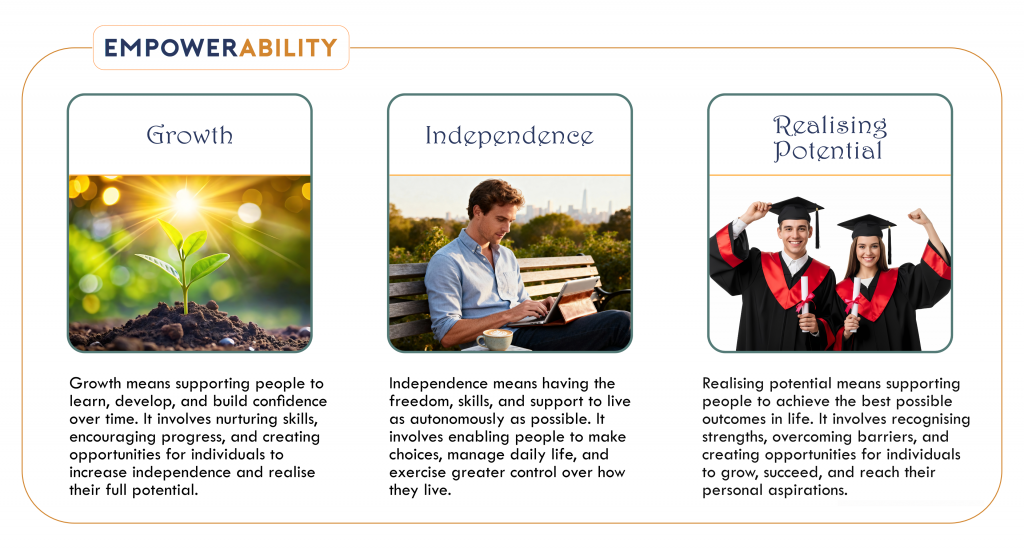
Supporting people to grow, develop, and move forward
At EmpowerAbility, we believe support should do more than keep people safe and well.
Safety and stability matter. However, they should be the starting point—not the finish line.
Every person has strengths, abilities, and potential. Although everyone grows in different ways and at different speeds, everyone can continue to learn, develop, and make progress.
Therefore, good support should help people move forward, build confidence, and create new opportunities.
What this standard means
Definition
This standard explains how to help people build skills, grow in confidence, become more independent, and achieve the goals that matter to them.
Why it matters
When support focuses only on maintaining the current situation, people may experience:
- low confidence
- dependence on others
- fewer opportunities
- loss of motivation
- reduced independence
- slower personal growth
Over time, even well-meaning support can unintentionally hold people back.
However, when support encourages growth, people are more likely to experience:
- greater confidence
- increased independence
- stronger self-belief
- improved resilience
- new opportunities
- a better quality of life
Progress creates hope.
Hope creates opportunity.
Core principle
At EmpowerAbility, we believe good support should ask two questions:
- What support does this person need today?
- What could this person achieve with the right support tomorrow?
Therefore, focus on possibilities as well as current needs.
Understanding growth, independence and potential
Help people grow

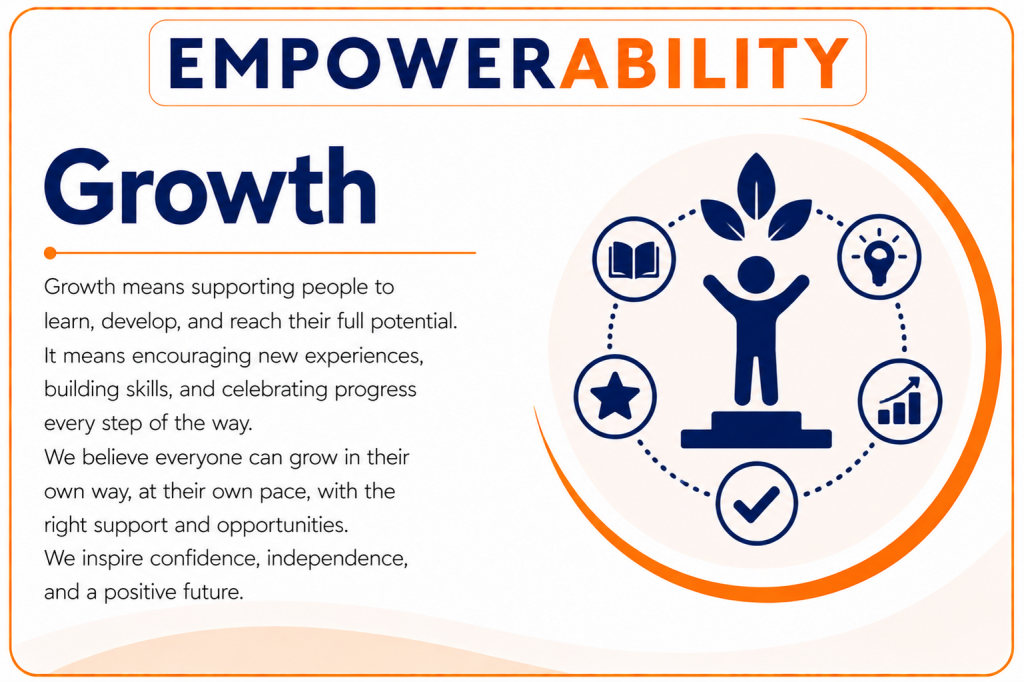
Growth does not always mean making big changes.
Often, it comes from small improvements made over time.
Growth may include:
- learning new skills
- building confidence
- improving communication
- developing routines
- becoming more resilient
- taking part in the community
- speaking up for yourself
- managing emotions more confidently
Everyone grows at their own pace.
Measure progress against the person’s own starting point—not against someone else’s.
Promote independence
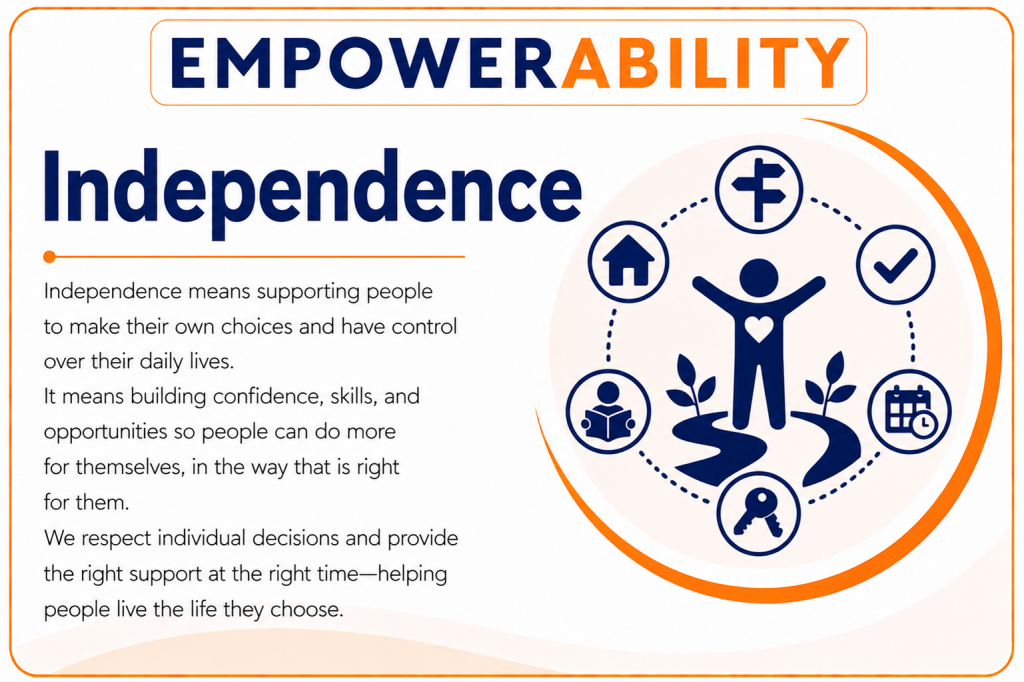
Independence does not mean doing everything alone.
Instead, it means helping people have more choice, more control, and more confidence in everyday life.
Many people continue to receive support while living highly independent lives.
The goal is not less support.
The goal is more independence.
Help people realise their potential
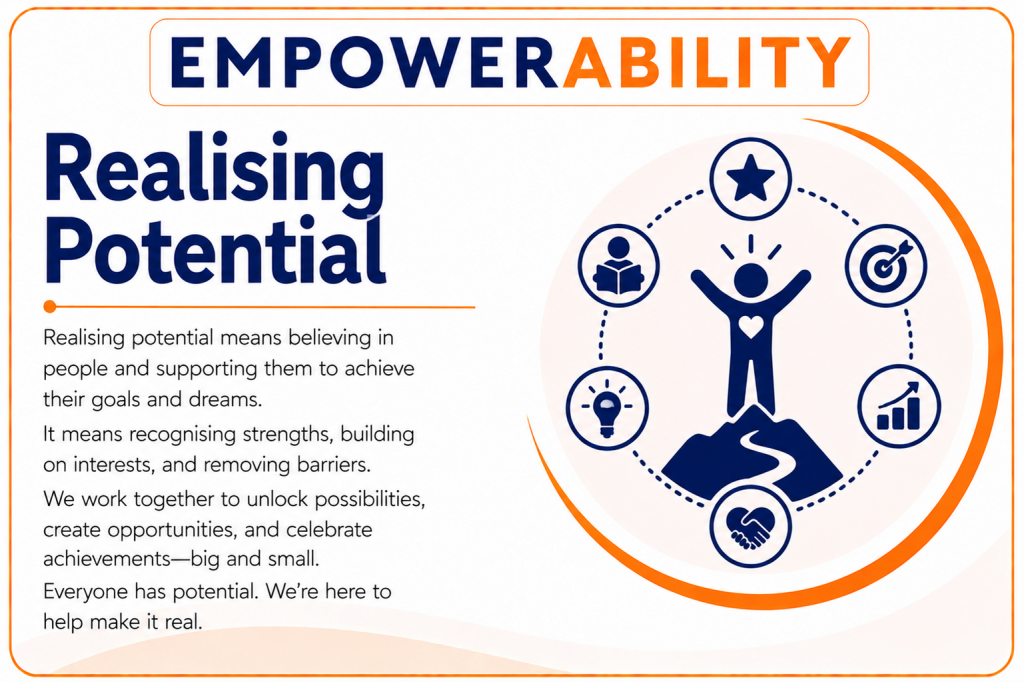
Potential looks different for everyone.
For one person it may mean finding paid work. For another, it may mean making new friends, cooking independently, travelling with confidence, or joining a local group.
Help people set goals that matter to them—not goals chosen by the service.
Required outcomes
Build on strengths
Start by identifying each person’s:
- strengths
- interests
- talents
- goals
- ambitions
- opportunities to grow
Always look for what people can do before focusing on what they cannot.
Promote independence every day
Help people do as much as they safely can for themselves.
Where appropriate, reduce unnecessary support gradually as confidence and skills increase.
Teach everyday skills
Create opportunities to learn through everyday life.
For example, help people develop skills in:
- cooking
- budgeting
- travel
- household tasks
- self-care
- communication
- using technology
- decision-making
Learning should become part of everyday support.
Set meaningful goals
Work with people to set goals that are:
- realistic
- achievable
- motivating
- important to them
Review goals regularly and celebrate progress.
Celebrate success
Recognise every achievement, no matter how small.
Small successes build confidence, encourage learning, and inspire people to keep moving forward.
Create opportunities
Support people to take part in:
- education
- training
- volunteering
- employment
- hobbies
- community activities
- social opportunities
New opportunities often lead to new possibilities.
Best practice guidance
Start with strengths
Always ask:
- What can this person already do?
- What could they do with the right support?
- What barriers can we remove?
Focus on ability before limitation.
Take small steps
Big goals often begin with small actions.
For example:
Instead of aiming to “live independently”, start by helping someone:
- prepare breakfast
- manage a shopping list
- travel independently
- make their own appointments
Small steps lead to lasting progress.
Avoid creating dependence
Support should help people become more independent—not more reliant on services.
Therefore, review support regularly and ask:
- Are we helping this person grow?
- Or are we doing too much for them?
Encourage safe challenges
People often learn by trying new things.
Support them to take safe, reasonable risks, learn from experience, and try again when things do not go to plan.
Growth often begins just outside a person’s comfort zone.
Build confidence
Encourage progress without creating pressure.
Everyone learns differently.
Be patient, recognise effort, and celebrate improvement as well as success.
Poor practice
Warning signs
Review your practice if you notice:
- little progress
- increasing dependence
- low expectations
- unclear goals
- support focused only on daily tasks
- few opportunities to learn
- loss of motivation
These warning signs should always lead to action.
Evidence of compliance
How you can demonstrate quality
You can demonstrate quality through:
- outcome reviews
- support plans
- goal tracking
- progress records
- resident feedback
- observations
- supervision records
- quality audits
Most importantly, people should experience growing confidence, greater independence, and better opportunities.
Reflection
Questions to ask
- Are we building on this person’s strengths?
- Is independence increasing?
- Have we created opportunities to learn?
- Are the person’s goals meaningful?
- Are we encouraging safe challenges?
- Is this person moving forward?
Regular reflection helps people achieve more.
Quick summary
Great support helps people grow.
Instead of simply maintaining the present, it helps people build skills, gain confidence, become more independent, and achieve the goals that matter to them.
Key points
- Everyone has potential.
- Build on strengths.
- Encourage independence.
- Celebrate progress.
- Create opportunities.
- Help people move forward.
Learn more
Related standards
- Standard 2 — Choice, Voice & Control
- Standard 5 — Housing Quality, Design & Accessibility
- Standard 6 — Person-Centred Support & Outcomes
- Standard 7 — Communication & Relationships
- Standard 10 — Community, Belonging & Meaningful Life
Video learning
Coming soon:
- Promoting independence without over-support
- Avoiding learned helplessness
- Setting meaningful goals
- Teaching everyday skills
- Building confidence through small wins
EmpowerAbility
Empowering lives. Enabling potential.